Seiko FAQ: Everything You Always Wanted to Know About Seiko Watches
Is Seiko a good watch brand? Why are some Seikos so expensive? Where are they really made? If you've ever asked yourself these questions, you're not alone. Tens of thousands of people search for them on Google every month. And the answer isn't as simple as yes or no. Because behind every question there's a story, an engineering decision, or a piece of Japanese culture worth telling.
We've compiled the most frequently asked questions about Seiko, the ones that really matter, and answered them with data, context, and that tone that helps you understand why this brand is so much more than an affordable watch. This isn't a technical manual—it's a guided journey through the Seiko universe.
📖 Frequently Asked Questions Index
Is Seiko a good watch brand or is it entry-level?
Good question. And the short answer is: it depends on which Seiko we're talking about. Because Seiko isn't just one brand—it's an ecosystem. And within that ecosystem, there are watches from €50 to several thousand euros.
Generally speaking, Seiko is an excellent brand. It's one of the few vertically integrated manufactures in the world: they design and manufacture practically all their components in-house, from spring alloys to crystals. That guarantees a level of quality that few brands in their price range can match.
Is it entry-level? Some collections are indeed entry-oriented (Seiko 5, some entry-level Prospex models). But the same brand has lines like high-end Prospex, Presage Craftsmanship, or Astron GPS Solar that sit in a much higher segment, with finishes and technologies that compete with prestigious brands. The honest answer is: Seiko has something for every budget, and at every level, the price-to-quality ratio is hard to beat.
Historical context: In the 1960s, Seiko set out to prove it could manufacture mechanical watches as accurate as the Swiss. Since then, the brand has never stopped proving that precision knows no nationality.
↑ Back to indexWhere are Seiko watches made? Are they really Japanese?
This is one of the most delicate and misunderstood questions. Yes, Seiko is a Japanese brand. Its headquarters are still in Tokyo's Ginza district, where Kintaro Hattori opened his first store in 1881. But manufacturing has nuances.
Seiko has factories in Japan (mainly in Nagano, Iwate, and Yamagata prefectures) and overseas (Malaysia, Singapore, China). The key is reading the dial:
- "Made in Japan" or "Japan Made": assembled with Japanese components. This is what collectors desire most.
- "Japan Movement": the movement is Japanese, but final assembly may have been done outside Japan. It's still a high-quality product.
Anecdote: The Shizukuishi factory in Iwate, where high-end Seiko movements are made, is known as the "sanctuary" of Japanese watchmaking. There, craftsmen with decades of experience hand-polish each component. It's a level of craftsmanship deeply rooted in Japanese tradition.
If you've ever wondered why one Seiko costs €200 and another €2,000, the answer lies in the place of manufacture and the level of finishing.
↑ Back to indexWhat does "Seiko" mean? Why is it called that?
The name is a declaration of intent. "Seiko" (精工) in Japanese means "exquisite," "meticulous," or "precise". But the story is longer.
In 1892, Kintaro Hattori founded his first watch factory and named it "Seikosha" (精工舎), meaning "House of Precision" or "House of Exquisite." The full name was a promise of quality. After the Great Kanto Earthquake of 1923, which destroyed his facilities, Hattori rebuilt and in 1924 launched his first wristwatch with the simplified name: "Seiko". He dropped the "sha" (house) to introduce the brand as we know it today.
Curiosity: The kanji 精 (sei) is also used to refer to essence or purity. It's no coincidence. For the Japanese, precision isn't just technical—it's a matter of honor and discipline. Wearing a Seiko is wearing that concept on your wrist.
In 2024, Seiko celebrated the centenary of the first watch with "Seiko" on the dial. 100 years of history condensed into five characters.
↑ Back to indexAre Seiko watches quartz or automatic? Which is better?
Seiko manufactures both, and does so at an exceptional level in each category. The question isn't which is better, but which best suits what you're looking for.
Seiko quartz watches: These aren't just any quartz. Seiko invented the world's first quartz watch in 1969 (the Astron). Today, their high-end quartz movements (like those in the Astron GPS Solar collection) offer accuracy of ±5 seconds per year. Basic quartz movements are just as reliable: a battery can last 3 years without missing a beat.
Seiko automatic watches: This is the heart of the brand. From the legendary 7S26 (without manual winding) to the modern 6R35 (with 70 hours of power reserve). The advantage of a Seiko automatic is that you get an in-house mechanical movement, with decades of refinement, at a price other brands can't match.
Which is better? If you want maximum accuracy and don't want to worry about winding, quartz (especially an Astron) is unbeatable. If you value craftsmanship, the smooth sweep of the seconds hand, and a connection to mechanical tradition, the automatic is your path. Many collectors own both.
↑ Back to indexWhy do some Seikos cost €100 and others €5,000?
The answer lies in three factors: movement, finishing, and place of manufacture.
Movement: A Seiko 5 costing €100 houses a 4R36 caliber, manufactured automatically, accurate and robust. A €2,000 Seiko Astron houses a high-tech GPS Solar caliber with satellite connectivity and light-powered charging.
Finishing: The difference between standard polishing and artisanal polishing techniques is abysmal. High-end Seiko models are polished in Japan by masters who have trained for decades. That finishing adds cost, but also a level of beauty you can see and feel.
Place of manufacture: A Seiko made at the Shizukuishi factory (where high-end movements are made) has much higher production and quality control costs than one made in Malaysia. It's not that Malaysian-made ones are bad (they're excellent for their price), but the level of craftsmanship in Japan is on another level.
In summary: You're not just paying for a logo. You're paying for engineering, hours of artisanal work, and a heritage of precision that's priceless.
↑ Back to indexIs Seiko a luxury brand? Why do some consider it "low cost"?
This perception comes from the 1980s and 1990s, when Japanese quartz watches flooded the market and Seiko positioned itself as the affordable alternative to Swiss watches. But that view is incomplete.
Seiko isn't a luxury brand overall, but it has luxury lines. Its Astron GPS Solar, high-end Prospex, and Presage Craftsmanship Series collections offer technology and finishing that rival much more expensive brands.
Why do people consider it "low cost"? Because most know the Seiko 5 for €150, an excellent entry point, but don't know that the same brand makes pieces costing several thousand euros with technologies like GPS Solar or dials hand-painted by Japanese artisans.
Perception changes when you understand that Seiko is a universe. And in that universe, there's room for both first-time automatic buyers and collectors seeking the ultimate expression of Japanese technology.
↑ Back to indexWhat does "Prospex" mean in Seiko watches?
Prospex stands for "Professional Specifications." It's Seiko's line of tool watches. Born to meet the needs of professionals who depend on their watches in extreme environments: divers, pilots, explorers, mountaineers.
The history of Prospex is the history of Japanese diving. In 1965, Seiko launched the 62MAS, Japan's first diving watch. It accompanied the Japanese Antarctic research expedition between 1966 and 1969, proving its reliability in ice. In 1970 came the 6105-8110 (nicknamed "Willard" for its appearance in Apocalypse Now), a cultural icon. And in 1975, the 6159-022, the first titanium deep-diving watch.
Today, Prospex ranges from reissues of these classics (like the SPB143, heir to the 62MAS) to 1000-meter dive watches and pilot chronographs. They all share a common DNA: durability, legibility, and reliability. If you need a watch that can take whatever you throw at it, a Prospex is your ally.
↑ Back to indexDoes Seiko manufacture its own movements or buy them?
Seiko is one of the few vertically integrated manufactures in the world. This means they design and manufacture practically all their movements in-house, from the most basic quartz to the most complex Spring Drive.
They go even further: they make their own alloys for mainsprings (the famous Spron alloy), their own crystals (Hardlex and sapphire), their own gaskets, and even their own machine tools for manufacturing. In watchmaking jargon, this is the highest level of independence.
Why does it matter? Because when a brand controls the entire production chain, it can guarantee consistent quality and, most importantly, innovate without relying on external suppliers. That's why Seiko could invent quartz, Spring Drive, and GPS solar while others depended on third parties.
There are a few exceptions: some very affordable or niche models may use movements from other brands. But in the vast majority of their current catalog, the movement is 100% Seiko.
↑ Back to indexWhy do Seiko watches have the crown at 4 o'clock?
This is one of Seiko's hallmarks, especially on dive watches and classic Seiko 5 models. And there's a purely functional reason behind it.
In the 1960s, Seiko's designers observed that the crown at 3 o'clock sometimes dug into the back of the hand during wrist flexion, especially for divers and athletes. They moved the crown to 4 o'clock to make it more protected and less intrusive.
Additionally, on dive watches, the 4 o'clock crown allows for a lower profile and reduces the risk of snagging on diving equipment. It's a detail that demonstrates Seiko's obsession with ergonomics and functionality.
Curiosity: Not all Seikos have the crown at 4. Presage dress watches and some modern Prospex models often have it at 3. But if you see a Seiko with the crown at 4, you're looking at a design that prioritizes comfort and durability.
↑ Back to indexIs Seiko a good investment? Do Seiko watches increase in value?
Honest answer: most Seikos are not financial investments. They're watches made to be worn, not stored in a safe. But there are important exceptions.
Models that have increased in value:
- Limited edition Seikos: Some limited editions from Prospex, Astron, or Presage have maintained or increased their value on the secondary market.
- Iconic vintage Seikos: The original 62MAS, the 6105 "Willard," the 6139 "Pogue" (the first automatic chronograph in space) have skyrocketed in price. A 62MAS in good condition can exceed €5,000-8,000.
- Classic Seiko divers: Original SKX models, although mass-produced, have doubled in value since being discontinued.
General rule: Buy a Seiko because you like it, because you want to wear it, and because you value the engineering behind it. If it increases in value over time, great. But if you see it as an investment, there are better-performing brands. What is certain is that a well-cared-for Seiko doesn't lose all its value, and some models become classics over the decades.
↑ Back to indexWhat is the most expensive Seiko in the world?
In Seiko's current catalog (excluding independent derived brands), the record goes to models from high-end collections like Credor, Seiko's ultra-luxury line, little known outside Japan.
The Credor Spring Drive Sonnerie is a minute repeater with tourbillon and perpetual calendar, priced at over $500,000. Only a few units are made each year, by craftsmen who work on each piece for months.
In the better-known collections (Prospex, Presage, Astron), the most expensive models range from €5,000-8,000, featuring technologies like GPS Solar, hand-painted Urushi lacquer dials, or high-end movements like the 8L35.
Anecdote: There are unique Credor pieces that have sold at auction for over a million dollars, but these are prototypes or collector's pieces that were never commercially available. In regular production, these are the kings.
↑ Back to indexWhat is Seiko's connection to the Olympic Games?
Seiko's relationship with the Olympic Games is deep and has been key to its reputation for precision.
In 1964, Tokyo hosted the Olympic Games and Seiko was appointed official timekeeper. It was a milestone: Seiko supplied 1,278 different timing devices, including the first quartz chronometers in history. They were as large as a briefcase, but incredibly precise. It was the first time the world saw Seiko's precision on a large scale.
Since then, Seiko has been official timekeeper at five other Olympic Games (Sapporo 1972, Nagano 1998, among others) and at multiple world athletics championships. This experience in elite sports timing has directly influenced the development of their watches, especially the Prospex collection.
Curiosity: The Seiko 6139 "Pogue" chronograph, which flew into space in 1973 aboard Skylab 4, was also used by astronauts to time maneuvers. Seiko's precision was tested not only in stadiums but in outer space.
↑ Back to indexDoes Seiko only make watches or does it have other products?
Although the general public knows Seiko for its watches, Seiko Holdings Corporation is a much broader technology conglomerate. Its obsession with precision extends to multiple fields.
Seiko Instruments Inc. (an independent division) manufactures high-tech components such as:
- Miniature ball bearings (used in hard drives, medical equipment, and robotics).
- Industrial print heads for barcode and label printers.
- Mercury-free silver oxide batteries, among the most reliable in the world.
- Dental prosthetics and components for the medical industry.
They also have a luxury jewelry division (wedding rings, pearl necklaces) and, in the past, manufactured musical instruments.
In summary: the "House of Precision" applies its philosophy to any field requiring accuracy and quality. Watches are the visible face, but Seiko's precision engineering is in many places you wouldn't imagine.
↑ Back to indexWhere can I buy an authentic Seiko and how to avoid fakes?
Seiko counterfeits exist, especially of popular models like the Seiko 5, the SKX, and some dive models. To avoid surprises, follow these rules:
Where to buy safely:
- Authorized dealers and trusted jewelers. This is the safest option, with official warranty.
- Trusted platforms with buyer protection policies (eBay with high-reputation sellers, Chrono24, etc.). Look for sellers with years of history and thousands of positive reviews.
- Specialized second-hand market (watch forums, recognized collectors).
How to spot a fake:
- Price too low: If a high-end Seiko costs €100, it's fake. Always.
- Finishing: Fakes have rough polishing, poorly printed dials, and misaligned logos. On an authentic Seiko, everything is precise.
- Movement: If you can see the case back, look for the caliber engraved. Authentic Seikos have specific finishes depending on their range.
- Documentation: New Seikos come with box, manual, and warranty. The absence of these doesn't always indicate a fake (it's common with vintage), but it should raise suspicion.
If you have doubts about a specific model, collector forums (like the WatchUSeek forum or the r/Seiko subreddit) are excellent sources for opinions before buying.
↑ Back to indexWhat is Seiko's "Hardlex"? Is it better than sapphire?
Hardlex is the name Seiko gives to its hardened mineral crystals. It's not sapphire, but it's not standard mineral crystal either. Seiko developed this material to offer greater scratch resistance than conventional mineral crystal, but at a lower cost than sapphire.
Why don't they use sapphire on all their watches? For several reasons:
- Cost: Sapphire is expensive. On entry-level watches, using sapphire would significantly increase the price.
- Impact resistance: Sapphire is harder but also more brittle. On dive or tool watches, Hardlex can absorb impacts better without breaking.
Which is better? For scratch resistance, sapphire wins. But Hardlex is an excellent compromise between resistance, durability, and price. On high-end models, Seiko does use sapphire crystal (professional dive Prospex, Astron, Presage Craftsmanship).
Anecdote: Hardlex isn't just a crystal. Seiko also uses a special treatment called "Sapphire Hardlex" on some models, which combines a layer of synthetic sapphire over Hardlex to offer the best of both worlds.
↑ Back to indexWhat does "Seiko 5" mean and why is it called that?
The Seiko 5 series was born in 1963 and its name honors five essential characteristics that every Seiko 5 must fulfill:
- Automatic movement (no manual winding needed).
- Day of the week displayed on a disc.
- Date displayed on a disc.
- Water resistance (at least 30 meters).
- Crown at 4 o'clock (for greater comfort and protection).
These five characteristics made the Seiko 5 an extremely practical and reliable watch. For decades, it was the entry point into the world of mechanical watches for millions of people.
Today, the Seiko 5 Sports line continues and has evolved with more modern movements (like the 4R36, which adds manual winding and hacking) and designs ranging from classics (like the SRPD, heir to the legendary SKX) to collaborations with anime series and fashion designers.
Curiosity: The original 1963 Seiko 5 was Seiko's first automatic watch with date and day of the week. It was an immediate success and laid the foundation for what is now the world's most famous entry-level collection.
↑ Back to indexMore than half a century journeying through time with Seiko
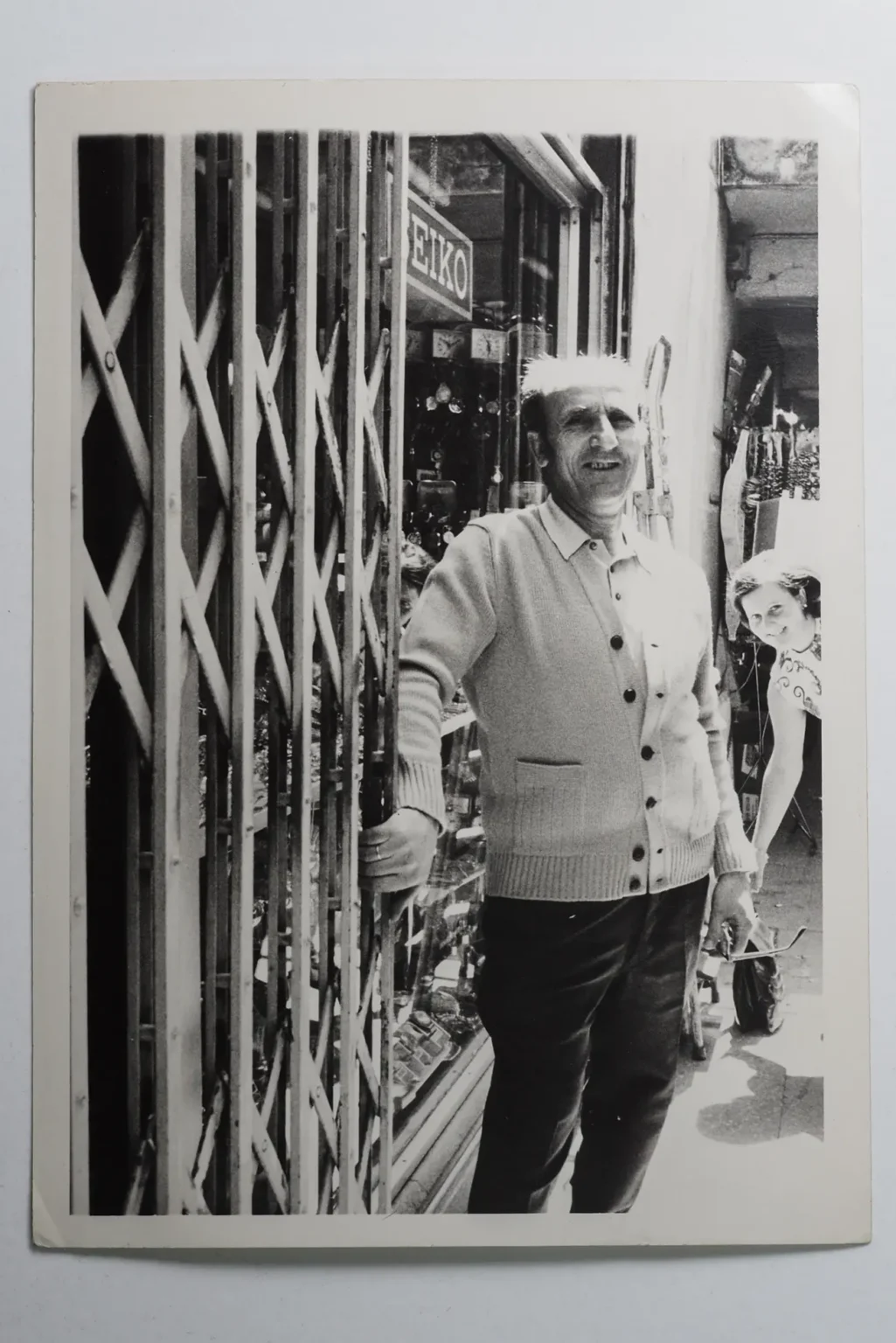
Our story cannot be understood without the heartbeat of a Seiko movement. For decades, we have been the bridge between Japanese watchmaking mastery and the most discerning collectors, establishing ourselves as a benchmark of authority and trust in the industry. We don't just sell watches; we safeguard a tradition that we have witnessed evolve from the first automatic calibers to the current technological revolution.
Being an official distributor for so many years has allowed us to accumulate deep knowledge that goes beyond the technical. We know every generation of the Prospex family, the timeless elegance of Presage, and the legendary robustness of Seiko 5. This track record is your greatest guarantee: when you choose a piece with us, you take home the backing of a team that understands the historical value of what you wear on your wrist.