
The heart of the watch: what is an automatic movement and why it beats (even when you don’t move it)
More than 100 miniature pieces working in sync. This is what happens inside your watch when you just look at it.
Get comfortable. We’re going to open a watch from the inside.
Not literally, of course. Leave that to a watchmaker with surgeon’s hands and tools that cost more than your first car. But I’m going to take you on a journey inside that small machine you wear on your wrist.
Because understanding automatic watch movement is not just for engineers. It’s the only way to look at your watch and know why it does what it does. Why it beats. Why it breathes. Why, even when it’s sitting on the nightstand, it still has life inside.
Let’s dissect the heart of your automatic. Piece by piece.
The rotor: the dancer that never rests
If you’ve ever turned your watch over and seen a semicircular piece that moves just by tilting your wrist, that’s the rotor. It’s the protagonist. The one that makes your watch “automatic” rather than “manual”.
The rotor is a mass of metal, usually heavier on the outer edge, that spins freely. With every movement of your arm —when you walk, when you gesture— the rotor dances. And that dance is not free: each spin transfers energy to the gears.
To understand how an automatic watch works you have to start here. The rotor steals energy from your movement and turns it into something useful. It’s your wrist feeding the beast.
And be warned, the rotor has its quirks. To function properly, it needs a tiny ball bearing with clearances of just microns. If that bearing gets dirty, the rotor stops dancing. Or worse, it dances but doesn’t transmit energy. And then your watch stops without you understanding why.
The barrel: the gas tank
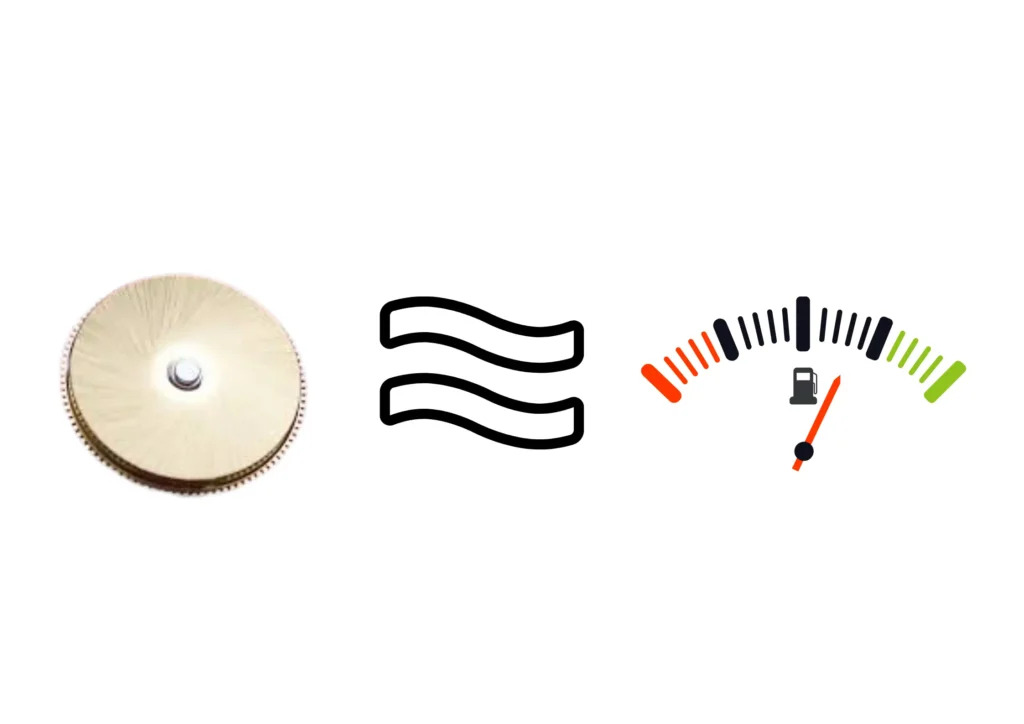
Now that the rotor has collected energy, it needs to be stored somewhere. That place is the barrel. A small toothed cylinder containing a spiral spring inside: the mainspring.
Imagine a tiny steel measuring tape, coiled upon itself. When the rotor spins, it tightens that spring. When the spring wants to unwind, it releases energy little by little. Simple as that. And just as complex at the same time.
The automatic watch power reserve when stopped depends directly on this component. On how long the spring is, the quality of the steel, the internal friction. Modern barrels can store energy for 48 hours, 70 hours, even 8 days in some high-end models.
But here’s a detail few know: the mainspring is never completely tense nor completely loose. Designers always leave a reserve. Because if the spring unwound completely, the final force would be so weak that the watch would stop before exhausting the theoretical reserve. That’s why automatics have that safety margin.
The gear train: the highway where force travels
The barrel has the energy, but it needs to be carried to the end of the journey. And it can’t arrive all at once. It has to arrive measured, controlled, dosed.
This is where gears come in. A cascade of toothed wheels that gradually reduce speed and increase force. The first wheel receives the push from the barrel and passes it to the second, this to the third, and so on until reaching the balance wheel.
Each wheel is mounted on tiny axles that rotate on synthetic rubies. Yes, rubies. They’re not decoration or a luxury whim. They’re extremely hard bearings that reduce friction. Metal on metal wears out and consumes energy. Metal on ruby lasts decades.
A decent automatic movement has at least 17 rubies. The more complicated ones exceed 30. And each one is there for a reason, not so the manufacturer can boast numbers on the dial.
The regulating organ: the metronome that sets the rhythm
Here comes the most fascinating part. What differentiates a real watch from a mechanical toy.
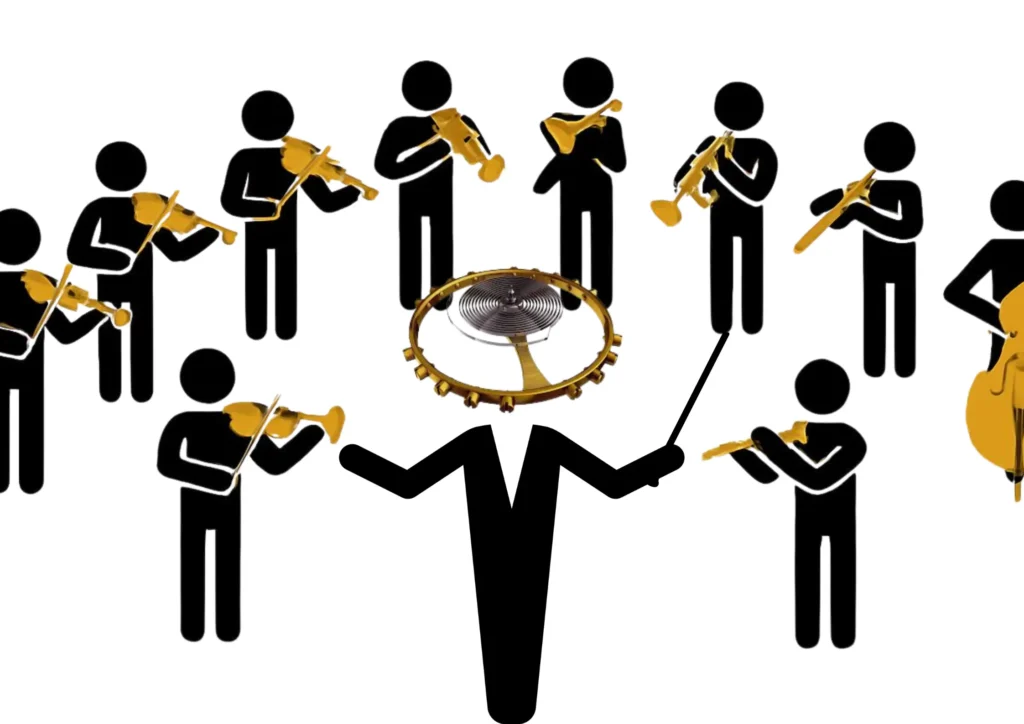
The regulating organ consists of two parts: the balance wheel and the hairspring. The balance wheel is an inertial wheel that spins back and forth, first one way, then the other. The hairspring is a tiny, thin spring that always returns it to the starting position.
This assembly beats at a specific frequency: 18,000, 21,600, 28,800 alternations per hour. That tick-tock you hear if you hold the watch to your ear is the balance wheel dancing to the rhythm set by the hairspring.
And here’s the magic: that beat is adjustable. If the watch runs slow, the watchmaker shortens the hairspring. If it runs fast, they lengthen it. But just a tiny bit. We’re talking fractions of a millimeter that change the watch’s tempo.
The difference between automatic and quartz watches is especially noticeable here. A quartz uses a crystal that vibrates 32,768 times per second, always identical. An automatic uses a spring and a wheel, subject to gravity, temperature, wear. That’s why a quartz is more precise. And that’s why an automatic has personality.
The escapement: the guardian that counts the beats
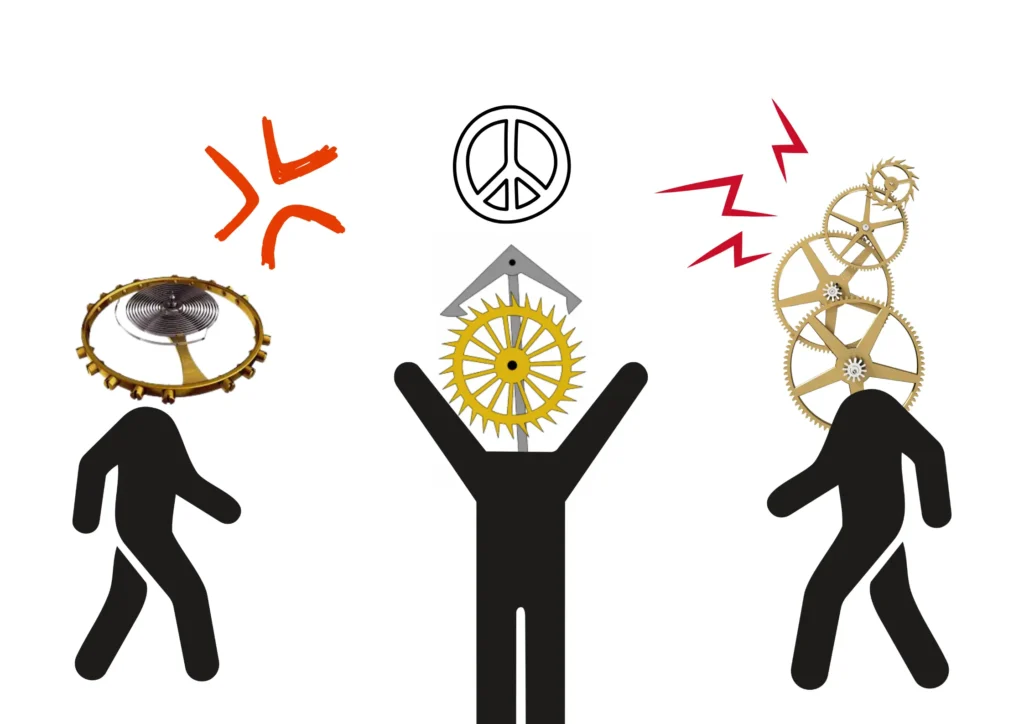
Between the gear train and the regulating organ there’s a gatekeeper. Something that lets just the right amount of energy pass, at just the right moment. That’s the escapement.
The escapement is a brilliant invention. It has two functions: to prevent the gear train from running wild and releasing all the energy at once, and to count each beat of the balance wheel to transmit it to the hands.
The most common is the Swiss lever escapement. An anchor-shaped piece that dances between two wheels, letting one tooth pass with each oscillation. It’s a hypnotic movement to see if you have a watch with a transparent case back.
Each time the balance wheel oscillates, the escapement lets one tooth pass. With each tooth that passes, the seconds wheel advances one step. Thus, beat by beat, time is built.
For all this to work, you need to know how to wind an automatic watch correctly, because if you manually wind it when it’s stopped, you’re filling the tank so the escapement can start distributing energy as soon as the balance wheel moves.
The winding and time-setting system: when you intervene
The rotor winds on its own, but sometimes you need to lend a hand. That’s what the crown is for. And what happens when you pull it out and turn it is pure miniature engineering.
Inside there’s a mechanism that can do three different things depending on how you manipulate the crown:
– Position 0 (crown screwed in or pushed in): the watch runs and the rotor winds.
– Position 1 (crown pulled out one step): here you usually change the date if the watch has one.
– Position 2 (crown pulled out all the way): you stop the seconds hand and can move the hands.
When you manually wind in position 0, you’re doing the same job as the rotor but with your fingers. The winding gears connect directly to the barrel and tension the mainspring.
Some ask does an automatic watch need manual winding always. The answer is no, but if it’s been stopped for days, yes. A little push before putting it on helps the rotor not have to work so hard to start the mechanism.
Synthetic rubies: the bearings that look like jewels
Those little red dots you see inside a watch aren’t valuable gems. Well, they are, but don’t think your watch is worth more because it has real rubies.
They’re synthetic rubies, created in a laboratory, with extreme hardness. Their function is purely mechanical: to act as bearings for the gear axles.
Metal rubs against metal and wears out. Plus, lubricating oil spreads and loses effectiveness. In contrast, metal against ruby keeps friction low and oil in place.
When you see specifications saying “17 jewels”, “21 jewels” or “25 jewels”, it’s not marketing. It’s the number of points where the manufacturer has decided to place rubies to reduce wear. More rubies doesn’t mean better watch, it means more complicated, with more moving parts that need that type of bearing.
Invisible maintenance: what happens when you’re not looking
This whole army of tiny pieces lives bathed in oil. Special oils, developed over decades, that don’t evaporate, don’t thicken with cold, don’t become sticky with heat.
But nothing lasts forever.
Over the years, the oil degrades. Dust, even if you don’t see it, seeps through the tiniest gaps. Gears start to struggle. Friction increases. And the watch starts losing accuracy. First seconds, then minutes.
That’s why it’s important to know how often to service an automatic watch. The answer isn’t “when it stops”. It’s every 5 years, at most 7. Whether it’s a Rolex or a 200-euro Seiko, physics is the same.
And when you ask automatic watch service cost, the answer is frightening. Because it’s not just changing oil. It’s disassembling piece by piece, cleaning each gear with ultrasound, greasing with micro-syringes where needed, and reassembling everything with exact tolerances.
But that price isn’t an expense. It’s the watchmaker’s salary for spending 3 hours with your watch so you can tell time for another 5 years.
The difference with a manual: the rotor changes everything
If you’ve made it this far, you now know what is an automatic watch movement and you also understand the difference between automatic and manual watches.
The manual needs you to wind it. Every day, more or less at the same time. It’s a ritual. A physical connection between you and the machine.
The automatic can also receive manual winding, but its charm is that it doesn’t need it. The rotor works while you live. You move, it charges. You sit, it spends. It’s a symbiosis: you give it movement, it gives you the time.
That’s why when someone asks if an automatic watch is worth it for someone who doesn’t want complications, the answer is usually yes. Because it takes on the complications. You just have to wear it.
Everything beats, even if you don’t see it
Next time you look at your wrist, remember what’s inside.
A rotor that dances. A barrel that stores. A gear train that transports. A balance wheel that beats. An escapement that counts. And all of it bathed in oil, set in rubies, adjusted to thousandths.
Your watch doesn’t tell time. It breathes time. And you, without knowing it, lend it your movement to keep it alive.
That is an automatic watch. That’s what beats on your wrist.
From theory to wrist (even if online)
You’ve seen how the rotor dances. How the barrel stores every step you take. How the balance wheel beats tirelessly. You’ve understood why an automatic watch is not just a machine, it’s a companion.
But there’s something that not even the best explanation can give you: the desire to check it out for yourself.
Because in the end, a watch is chosen with the eyes, yes. With the head, too. But above all, with that feeling you can’t explain when you turn your wrist to look at it even though you already know the time.
That is discovered when you adjust it to your measure, when you wear it the first full day and, come nightfall, you realize you didn’t want to take it off.
Here’s where to start looking for that moment. And remember: a watch isn’t found by searching. It’s found when you least expect it. But now, at least, you know what you’re looking for.


