Which is the best Japanese watch brand? Seiko, Citizen, Casio
And they did. With such perfect precision that today, three out of every four watches you see on the street bear the signature of one of them. The "quartz crisis" of the 1970s was no accident: it was a coup d'état planned for decades. But the most interesting thing is not how they humiliated Switzerland, but that they did it following three radically different paths.
This is the story of the Japanese triple threat: Seiko, Citizen and Casio. Three ways of understanding time, one obsession with perfection. If you've ever wondered which one is best, get ready: the answer is not one, but three. And they're all correct.

💥 CASIO
The indestructible electronics engineer. G-Shock, Oceanus and digital legacy.
Discover Casio →1881–1946: The birth of an empire (three ways to start)
To understand who they are today, we must travel back to their origins. No two brands were born alike, and that difference in DNA still marks every watch they make.
Seiko (1881): the craftsman who dreamed of absolute precision
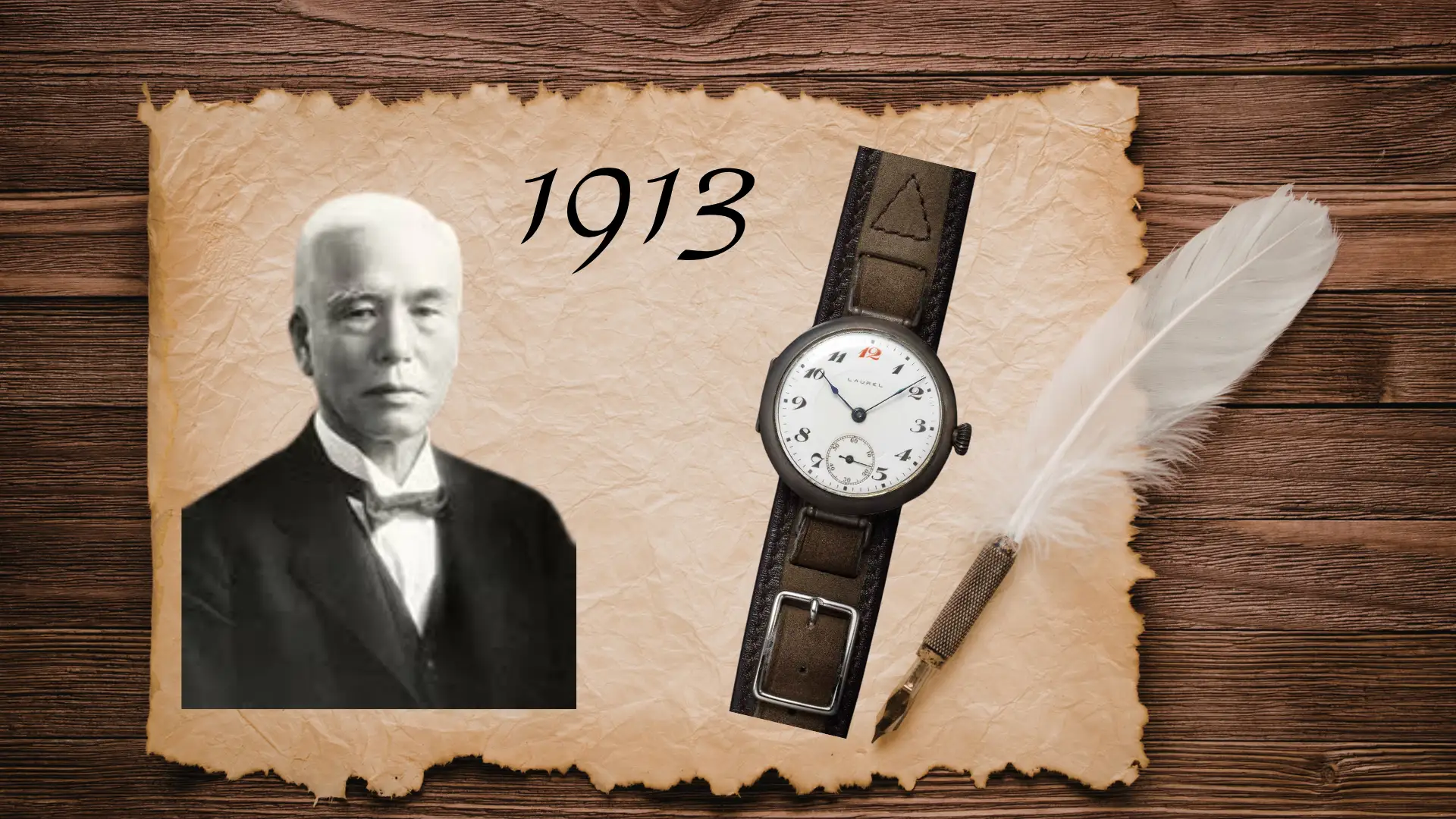
1881. A young 21-year-old entrepreneur named Kintarō Hattori opens a small watch repair and sales shop in Tokyo's Ginza district. Little did he know then that his name would become the cornerstone of Japanese watchmaking. In 1892, he founded the "Seikosha" factory (meaning "house of precision") and in 1913 manufactured the Laurel, the first wristwatch in Japan's history. We're talking about a brand that doesn't just make watches, it conceives them from scratch. From its legendary automatic movements to Grand Seiko's haute horlogerie, which in 1960 was born with the audacity to be "the ideal watch" capable of rivaling the best Swiss watches. Its philosophy is "Monozukuri".
Citizen (1930): the watch for every citizen
If Seiko is the craftsman, Citizen is the humanist. Officially founded in 1930, its name says it all. They wanted to make a watch "for every citizen". Accessible, democratic, but without renouncing cutting-edge technology. The name wasn't a whim: in 1924, the mayor of Tokyo commissioned a pocket watch that could reach the entire population, and they already christened it "Citizen". Interestingly, Citizen had Swiss investment in its early days, which gave it a solid technical base. But soon they charted their own course. Their motto wasn't a pose: democratize technology, and do it in a big way.
Casio (1946): the electronics engineer who defeated gravity
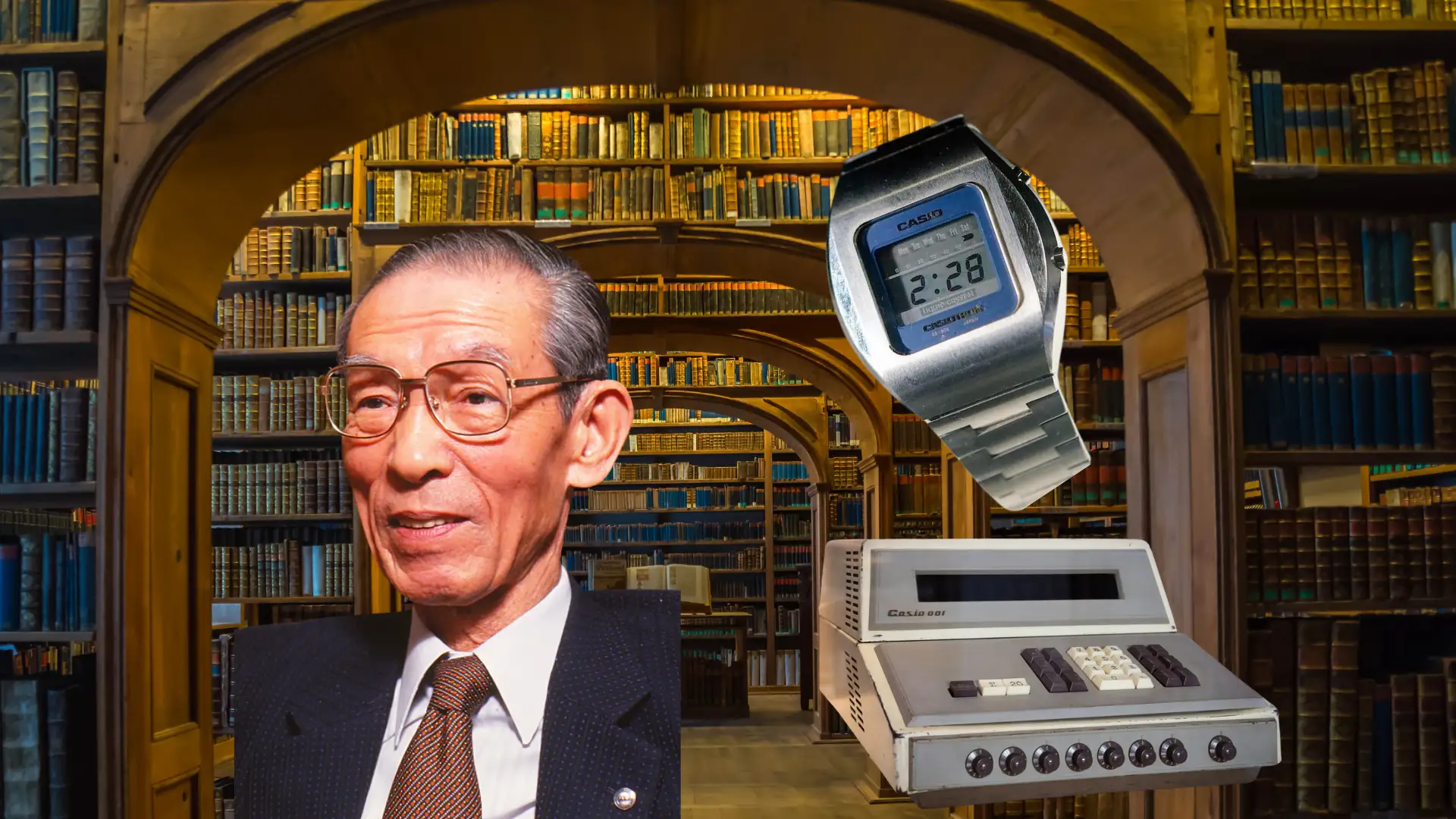
And then there's Casio. The youngest of the three, and the most radically different. Founded in 1946 by Tadao Kashio, a precision engineer, as a manufacturer of calculators and electronic devices. Its DNA is completely different: they don't come from traditional watchmaking, they come from the logic of transistors. Their first successful product was a vacuum tube calculator, and then the revolutionary Casio Mini, the affordable personal calculator. It wasn't until 1974 that they launched their first watch, the Casiotron. And it was already a digital marvel with an automatic calendar that knew if the month had 30 or 31 days. While Seiko polished hands, Casio lit up pixels. Key fact: While Seiko and Citizen fought over tenths of a second in the mechanical realm, Casio looked elsewhere: the future was digital, and they knew it before anyone else.
December 25, 1969: the day time changed forever
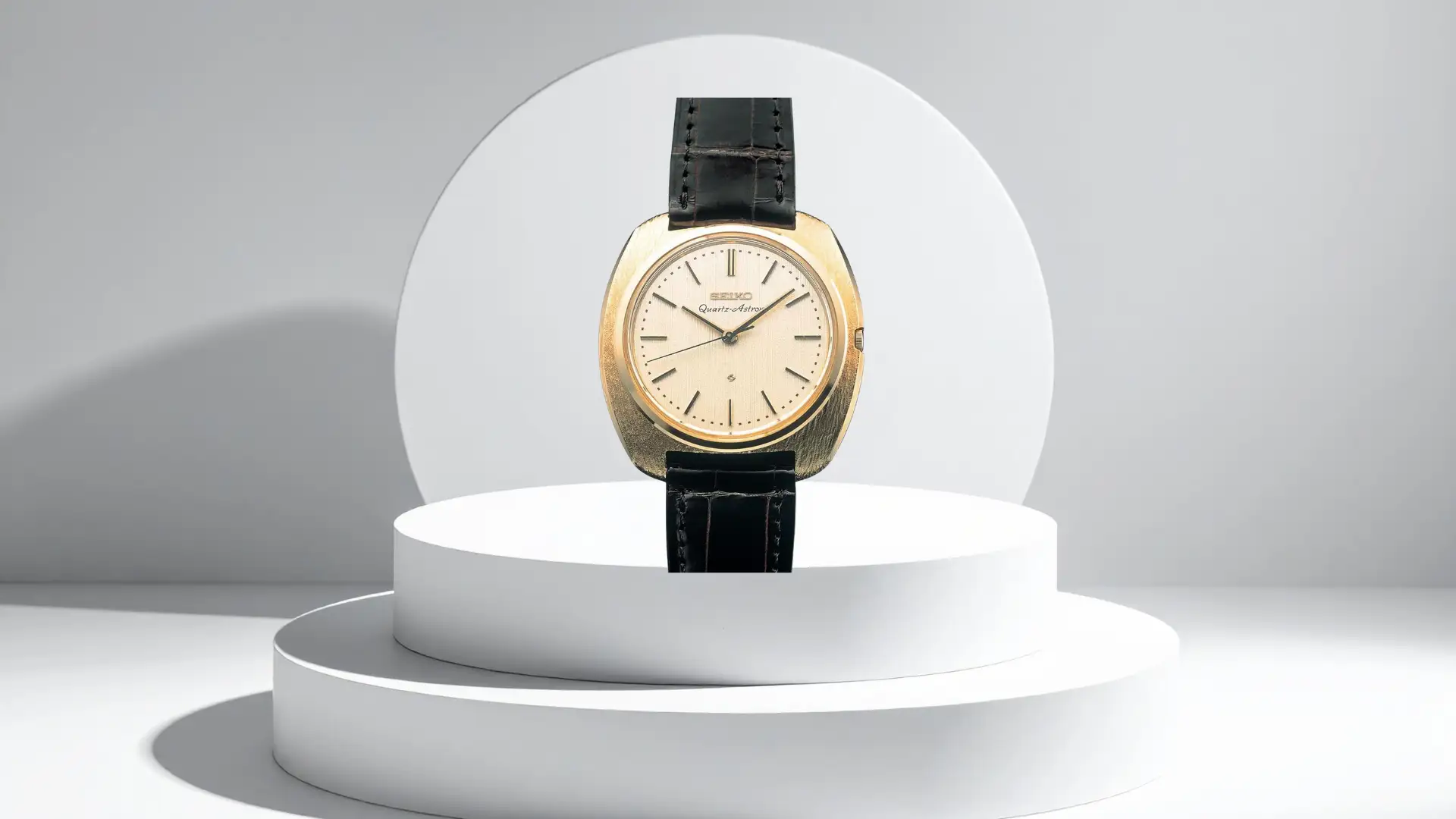
To understand the giant leap, we have to travel to that exact date. That day, Seiko introduced the Astron 35SQ, the world's first quartz wristwatch. Suddenly, a watch didn't need winding, didn't lose seconds per day, and was a hundred times more accurate. It cost as much as a car: 450,000 yen, the price of a Toyota Corolla. The "quartz crisis" wiped out half of the Swiss watch industry. Between 1970 and 1980, more than 900 Swiss watch companies went bankrupt. Japan had won the game. In 1979, Japan manufactured 60 million watches a year, becoming the world's largest producer.
Citizen strikes back: the Crystron LCD (1975) — Seiko fired the starting gun, but Citizen stepped on the accelerator. In 1975 they launched the Citizen Crystron LCD, one of the first digital watches with a liquid crystal display. It was the space race brought to the wrist. Casio and the Casiotron: the first digital blow — Casio launched its first watch in 1974 with an automatic calendar that knew the length of each month. The watch doesn't just measure time, it thinks for you.
1983: G-Shock, the watch that doesn't break
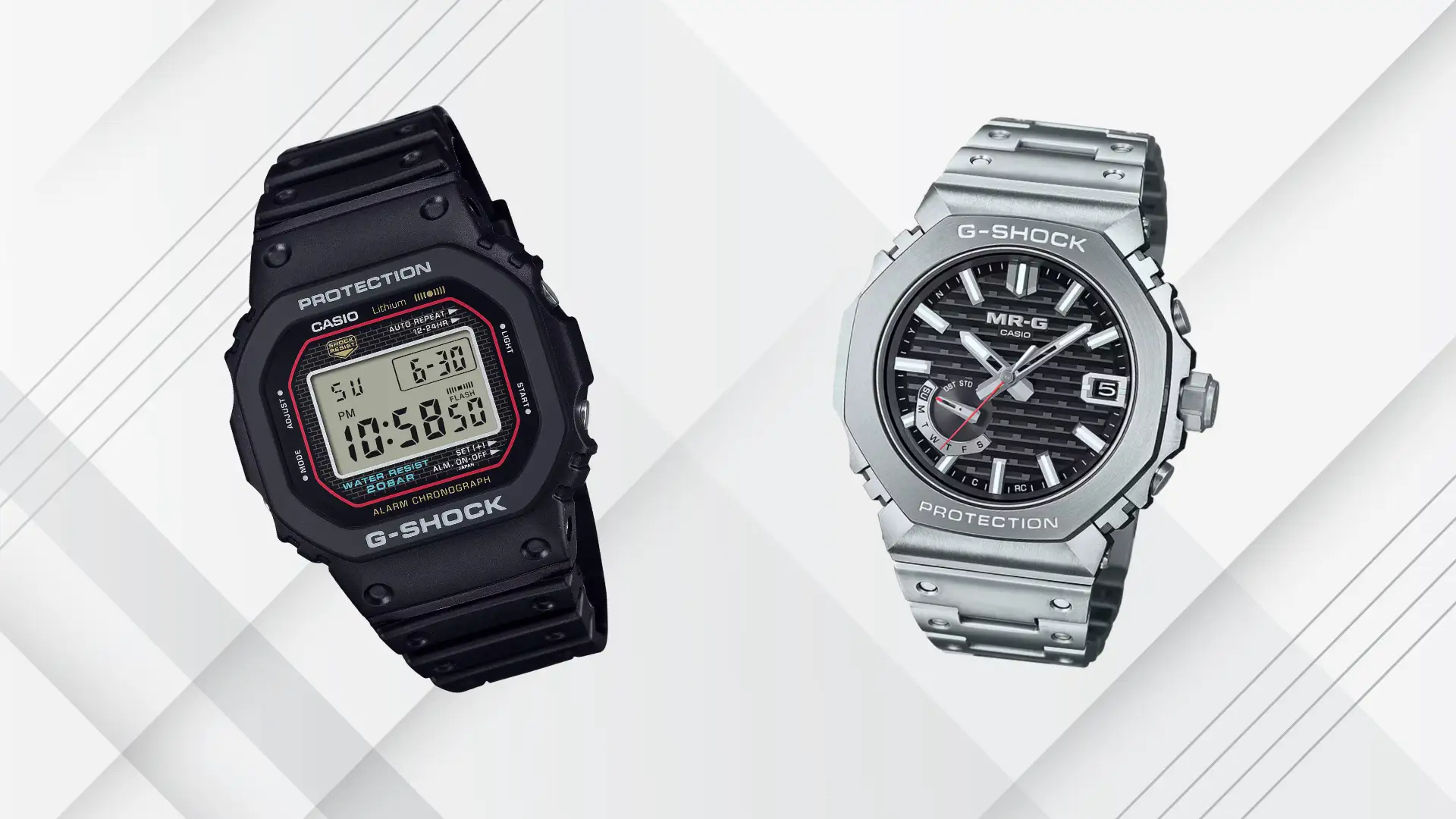
In the early 80s, a Casio engineer named Kikuo Ibe had a revelation. His father's watch fell to the floor and shattered. Ibe set himself an obsessive goal: to create a watch that wouldn't break even if dropped. The "Triple 10" challenge: 10 years of battery life, 10 bars of water resistance, and 10 meters drop onto a hard surface. It took two years and they created over 200 prototypes. In April 1983, the first G-Shock DW-5000C was born with a floating module. To prove it, Casio made an ad where a hockey player uses a G-Shock as a puck. The watch kept working. A legend used by Delta Force soldiers, Sting, and Keanu Reeves was born.
The obsession with metal: MR-G is born (1996)
But Ibe didn't stop. In the early 90s, he and his team set themselves an impossible goal: to make an all-metal G-Shock that was as tough as the original. They drew inspiration from car bumpers. After more than 6,000 drop tests, in 1996 they achieved the MR-G MRG-100, an unbreakable metal watch that cost five times more than a regular G-Shock. Today, MR-G watches are manufactured in the Yamagata "mother factory" using traditional Japanese polishing techniques.
Haute horlogerie: when Japan challenges Switzerland on its own turf
People often think the Japanese only make plastic or cheap quartz watches. Nothing could be further from the truth. When Japan decides to do luxury, it does so with a purity that is frightening.
Grand Seiko: the lion's roar in silence
If a Rolex shouts "luxury", a Grand Seiko whispers it. Since 1960, they perfected the "Zaratsu" finish, a distortion-free mirror polish. Their dials evoke landscapes of Suwa. In 1999 they introduced Spring Drive, a hybrid movement with accuracy of ±1 second per day and perfect sweep. It is the only technology that combines mechanics and electronics without batteries.
Citizen Chronomaster: the obsession with the exact second
In 2019 they presented the Caliber 0100, an Eco-Drive quartz watch with accuracy of ±1 second per year. It uses a thermally aged quartz crystal and samples temperature 540 times per second. Additionally, Citizen developed Super Titanium, five times harder than steel and 40% lighter.
Casio MR-G and Oceanus: unexpected luxury
The Oceanus line is the dressy haute horlogerie line with GPS, radio synchronization, solar power, and artisanal finishes. They are manufactured in Yamagata with Sallaz polishing. They are not sold outside Japan, which gives them exclusivity. Prices between 1000 and 2500 dollars, competing with mid-to-high-end Swiss watches.
Technical comparison: who makes the best movements?
| Technology | Seiko | Citizen | Casio |
|---|---|---|---|
| High precision quartz | Grand Seiko 9F: ±5 sec/year | Caliber 0100: ±1 sec/year | Oceanus/MR-G: ±15 sec/month (standard) |
| Solar technology | Kinetic (mechanical+quartz) and Solar | Eco-Drive (world leader, since 1976) | Tough Solar (in G-Shock and Oceanus) |
| Time synchronization | GPS in Astron | GPS and radio-control in Chronomaster | Multiband 6 (radio) and GPS in MR-G |
| Hybrid movements | Spring Drive (unique in the world) | No equivalent | No equivalent |
| Special materials | Ceramics, high-intensity steel | Super Titanium, proprietary alloys | Carbon, titanium with DLC, special resin |
Iconic models: history on your wrist
Seiko: five watches to understand the brand
- Seiko 5 (1963-present): entry-level automatic for under €200.
- Seiko SKX (1996-2019): cult diver, now discontinued.
- Seiko Astron (1969 and 2012): first quartz and first GPS in the world.
- Grand Seiko Snowflake (SBGA211): Spring Drive icon.
- Seiko Pogue (6139-6002): world's first automatic chronograph and first watch in space.
Citizen: three watches that changed the rules
- Citizen Crystron Solar Cell (1976): first analog solar, grandfather of Eco-Drive.
- Citizen Promaster Diver BN0151: king of value for money, 200m ISO.
- Citizen Chronomaster Caliber 0100 (2019): the most accurate quartz in the world (~€6000).
Casio: the trinity of indestructibility
- Casio F-91W (1989-present): over 100 million units, less than €20.
- Casio G-Shock DW-5600 (1987): the quintessential square.
- Casio G-Shock MR-G (1996-present): artisanal metal luxury from €3000.

Ultimate buying guide: which one is for you?
✅ Choose Seiko if...
You value history, tradition, and mechanical engineering. You want to feel the tick-tock of an automatic movement made by a total manufacture. You're looking for a gateway to collecting (Seiko 5 → Prospex → Grand Seiko). You like customization (modding). You accept some inaccuracy in lower ranges (±20 sec/day). View all Seiko watches →
♻️ Choose Citizen if...
You hate winding and changing batteries. You want a watch you can pick up and forget: Eco-Drive charges with any light. You travel frequently and need GPS/radio-control synchronization. You value lightweight materials like Super Titanium. You're looking for the most accurate watch in the world (Caliber 0100). Explore Citizen →
⚡ Choose Casio if...
Your life is a real or imaginary adventure: athlete, soldier, construction worker, or just clumsy. You're fascinated by the story of the indestructible G-Shock. You're a data geek: altimeter, compass, thermometer. You have a tight budget (F-91W for under €20). Discover Casio →
Executive summary: Seiko vs Citizen vs Casio
| Brand | Main strength | Main weakness | Star model |
|---|---|---|---|
| Seiko | Tradition, craftsmanship, mechanical variety | Irregular accuracy in lower range | Grand Seiko Snowflake |
| Citizen | Solar technology, accuracy, titanium | Sometimes conservative design | Citizen Caliber 0100 |
| Casio | Extreme durability, functionality, price | Digital aesthetics (not for everyone) | G-Shock DW-5600 / MR-G |
Legacy: the empire strikes back (and wins)
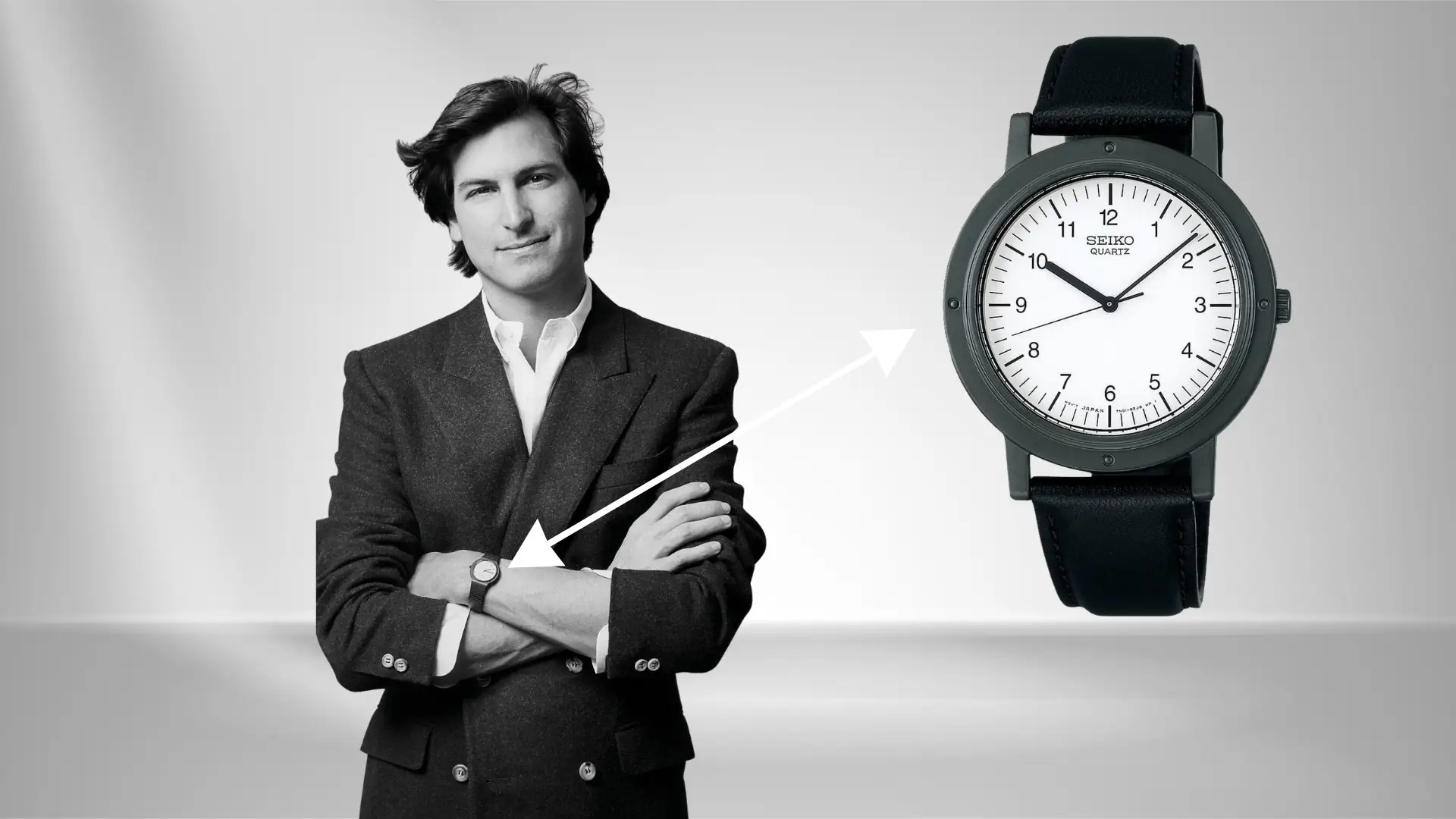
Did they humiliate Switzerland? In terms of volume, democratization, and reliability, yes. Today Japan is a benchmark in quartz, solar power, and GPS. It is home to the only real alternative to Swiss luxury: Grand Seiko, Citizen and Casio with MR-G and Oceanus. Figures like Bill Gates sport a $70 Casio Duro, and Steve Jobs never took off his Seiko Chariot. The great Japanese rivalry is not a war of egos, but a blessing for enthusiasts.
Posts relacionados