



The market for [ outdoor smartwatches ] is saturated with empty promises. Models that promise extreme resistance but fail in the first rain, devices with “integrated” GPS that actually depend on your mobile phone, and inflated prices for basic functions.
What makes the Timberland Trail Force S1 different? After an exhaustive comparison with its direct competitors, we have identified 5 decisive advantages that position it as the most balanced outdoor smartwatch on the current market.
If you’re considering investing in wearable technology for your outdoor activities, this comparison will show you why the Trail Force S1 consistently outperforms more expensive and more heavily advertised alternatives.
1. Authentic Outdoor Design vs. Market Imitations
The Trail Force S1: Real Timberland DNA
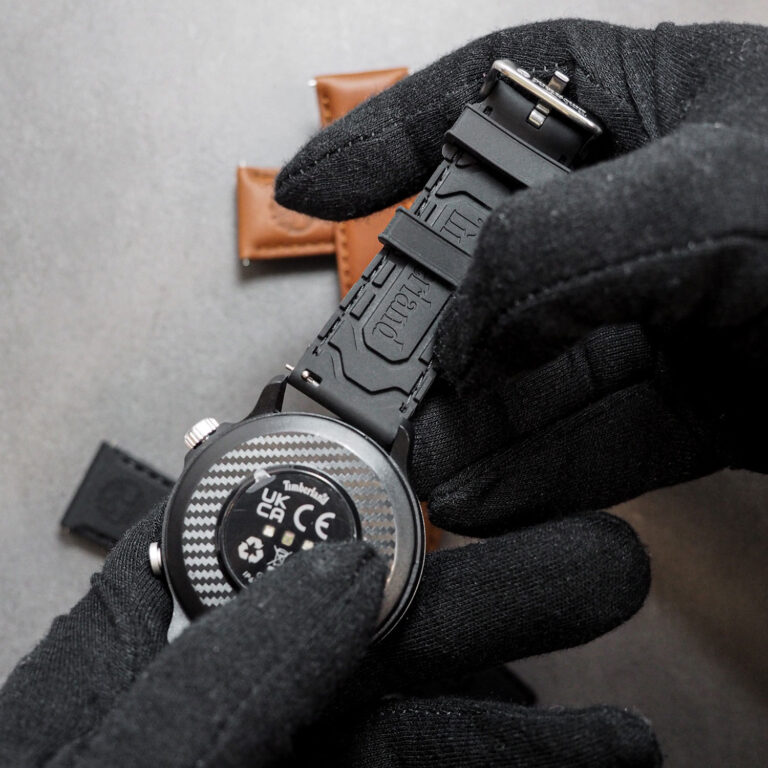
The Trail Force S1 doesn’t pretend to be outdoor; it IS outdoor. Its robust design is born from Timberland’s century-old heritage in footwear and equipment for extreme activities. Every line, every material, every ergonomic detail reflects decades of real-world experience in mountains, forests, and adverse conditions.
Certified Sustainable Materials: While other models use generic plastics, Timberland incorporates recycled materials and responsible manufacturing processes, without compromising resistance.
The Competition: Desk-Based Design
Common problem: Most “sports smartwatches” are urban devices with outdoor marketing. Their designs prioritize office aesthetics over real outdoor functionality.
Comparative examples:
- Fashion-sport models: Look good in photos, but are fragile in real-world use
- Outdoor imitations: Robust appearance, but with cheap materials
- Major tech brands: Excellent technology, but inadequate design for extreme activities
Verdict: The Trail Force S1 wins for its authenticity and real outdoor heritage.
2. Integrated GPS Technology: An Advantage Over Basic Models
Trail Force S1: Truly Independent GPS
Real integrated GPS means exploring new trails without depending on your smartphone. The Trail Force S1 includes a dedicated GPS receiver that works even in areas without mobile coverage. Practical advantages:- Accurate routes without draining your phone’s battery
- Functionality in remote mountains
- Real activity tracking, not an estimate
Competitors: “Connected” GPS (Dependent)
The common deception: Many models advertise “GPS” but actually require a permanent connection to your smartphone. Direct comparison:- Basic models (€50-100): No real GPS, only a pedometer
- Mid-range (€150-200): Assisted GPS (needs the phone)
- Trail Force S1: Independent GPS at a mid-range price
3. IP67 Certification: Superiority in Real-World Durability
Trail Force S1: Verified Protection
Certified IP67 guarantees:- Total dust resistance (first digit: 6)
- Immersion up to 1 meter for 30 minutes (second digit: 7)
- Independent lab tests, not self-assessment
- Intense and prolonged rain
- Splashes in water sports
- Extreme dust on mountain trails
- Accidental drops in puddles
Competitors: “Theoretical” Durability
Recurring problem: Models that promise resistance without official certification. Durability comparison:- No certification: Misleading marketing, fail easily
- IPX4/IPX5: Only light splashes
- IP65: Limited dust, less water resistance
- Trail Force S1 IP67: Verified full protection
4. Smart Connectivity: More Efficient than Alternatives
Trail Force S1: Perfect Balance
Optimized connectivity for outdoor use means:- Essential notifications without saturation
- Efficient synchronization that preserves battery
- Intuitive, accessible interface
- Priority calls and messages
- Automatic weather alerts
- Activity data synchronization
- Music control during exercise
Competitors: Too Much or Too Little
Design problem: Models with inadequate connectivity for outdoor use. Problematic types:- Ultra-connected: Saturate with notifications, drain battery
- Basic: Limited connectivity, poor synchronization
- Complex: Interfaces inadequate for use with gloves
5. Price-Quality Ratio: A Comparison with Direct Competitors
Trail Force S1: Demonstrable Real Value
Price-performance analysis reveals a significant advantage: What you get:- Independent GPS (value: €100+)
- IP67 certification (value: €50+)
- Authentic Timberland design (value: €75+)
- Full fitness monitor (value: €50+)
- Trail Force S1 Price: Significantly lower than the sum of its components
Competitors: Inflated Prices or Compromised Quality
Market problem: Unbalanced price-quality ratio. Direct comparison:- High-end (€300+): Similar features, excessive price
- Upper mid-range (€200-250): Fewer features at a higher price
- Low-end (€50-100): Tempting price, compromised quality
- Trail Force S1: High-end features, mid-range price
Final Verdict: Is It Worth It Compared to Other Options?
When to Choose the Trail Force S1
Ideal profile:
- Regular outdoor activities (hiking, running, cycling)
- You need real independent GPS
- You value an authentic outdoor design
- You’re looking for verified durability
- Mid-to-high budget (price-quality ratio)
When to Consider Alternatives
Other models if:
- Exclusive urban use (fashion models)
- Very limited budget (basic options)
- You need ultra-specific functions (extreme sports)
Our Recommendation
The Trail Force S1 consistently stands out in all relevant comparisons for real outdoor users. It’s not the cheapest or the most expensive, but it is the most balanced in terms of functionality, durability, and price.
To learn more: Explore our complete selection of Timberland outdoor smartwatches.
¿Tienes experiencia con otros smartwatches outdoor? Comparte tu opinión en comentarios o contáctanos para asesoramiento personalizado.
