
Shopping Cart
There are no more items in your cart




- New
Available

Hello Rotoooo?
I’m back. I’ve been to the moon and back.
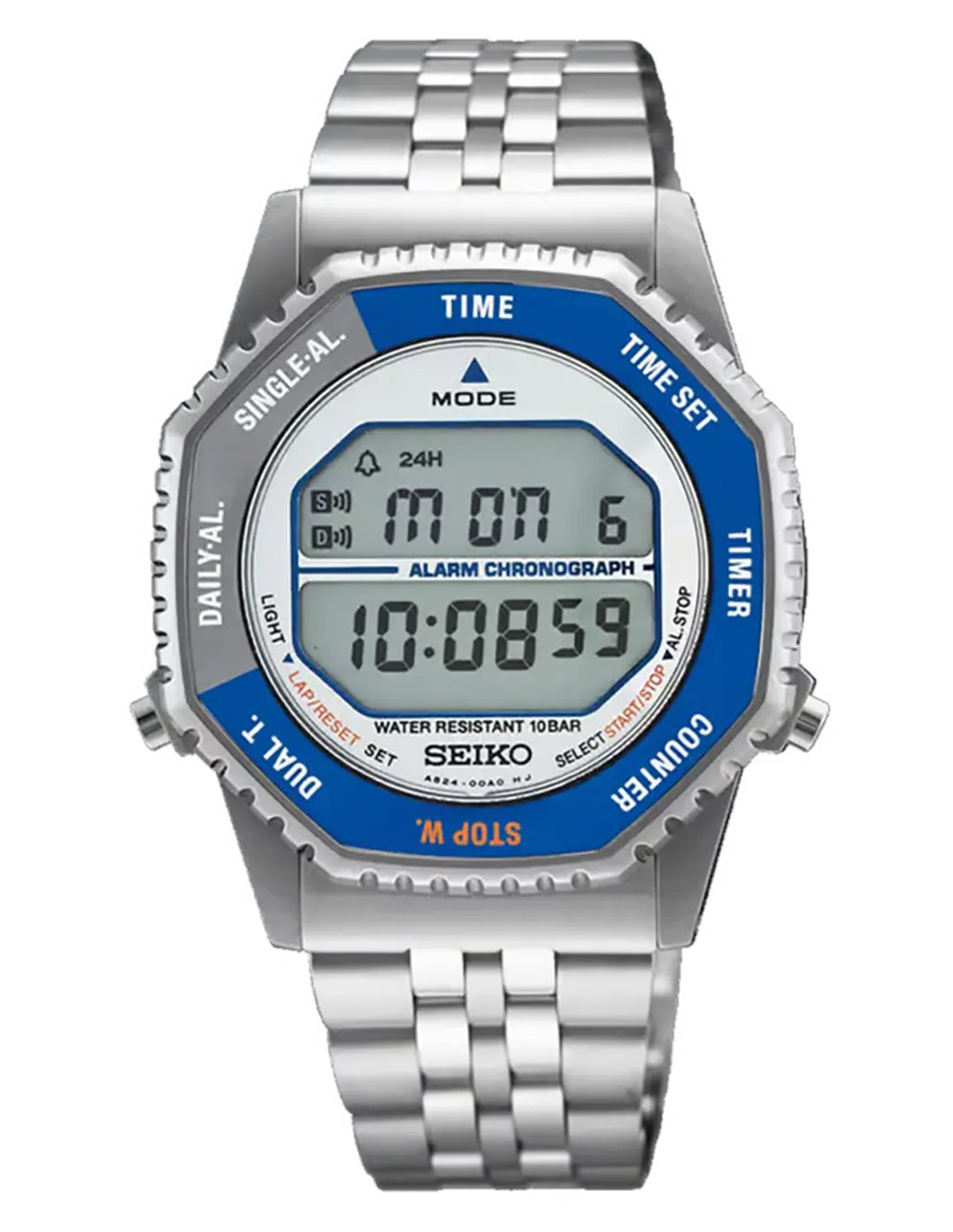
Seiko SMGG21P1. Grey and blue. A824 Caliber. The digital watch that astronauts wore in space for 20 years. And now, it’s back to stay on your wrist.
37 mm of steel. Octagonal rotating bezel. 100 meters water resistance.
The Rotocall is back: the digital Seiko that traveled to space, now in its grey and blue reissue.
This SMGG21P1 is the reissue of a watch that made history: 37 mm of steel, an octagonal rotating bezel, and a system that doesn't require a 40-page manual to change the time. Just turn the bezel and you're set.
Media outlets like Esquire, Hypebeast, and Wallpaper have told the story: before G-Shocks took over and Casio became synonymous with digital watches, NASA astronauts chose to wear Seiko. The original Rotocall was so practical in space that it was used in over 160 Space Shuttle missions.
Among those who trusted it were three pioneers: Sally Ride, Kathryn Sullivan, and Anna Lee Fisher. They wore it on their wrists while looking down at Earth—not because it was an official NASA-issued watch, but because it was the tool that worked best for them.
That same spirit, the tool that never fails, lives in this SMGG21P1. Turn the bezel and you'll understand.
What makes the Rotocall special isn't just that it's digital. It's how you use it. Instead of pressing impossible button combinations, you simply rotate the bezel.
Eight positions, eight functions: Time, Time Set, Timer, Counter, Stopwatch, Dual Time, Daily Alarm, and Single Alarm. Each side of the octagonal bezel has its function engraved. Align it with 12 o'clock, and the two side buttons let you adjust or use it. Simple, logical, and with that crisp click that confirms you've got it right.
It features a dual-level screen. On top, the current mode; below, the data (time, minutes, seconds, etc.). The typography is the 1982 original, but the contrast has been improved for better legibility indoors and outdoors, and the backlight has been updated without losing its retro vibe.
The SMGG21P1 is the grey and blue model of the collection. The same design astronauts wore for 20 years, but in a more discreet combination. Black dial, grey and blue bezel. For those who want to wear that same history... without drawing too much attention.
It features Hardlex, Seiko's hardened mineral crystal. It remains flexible and shock-resistant—crucial in zero gravity where a sharp impact could shatter sapphire—but today's version is clearer and more durable than the 80s original.
Water-resistant to 100 meters with a screw-down case back. You can swim, shower, or snorkel. Just avoid using the side buttons underwater.
In short: A 37 mm digital Seiko with a rotating function selector, 100m resistance, real space history, and a design that returned from the 80s to stay. For those who know that before Casio, NASA wore Seiko.
Technical sheet
| EAN | 4954628257253 |
|---|---|
| Brand | Seiko |
| Product type: | Watch |
| Reference | SMGG21P1 |
| Gender | Man |
| Collection | Rotocall |
| Shape Watch | Octogonal |
| Display | Digital |
| Movement | Quartz |
| Functions: | 12/24 Hour Alarm Bidirectional Rotating Bezel Chronograph Date Day Double Time Zone Reserve of Load |
| Crown Type | Screw-on crown |
| Watch Caliber | 8T63 |
| Box Material | Steel |
| Strap Material | Steel |
| Crystal type | Hardlex |
| Dial Color | Blue Grey |
| Bracelet Color | Steel |
| Case Diameter | 37.00 mm |
| Case thickness | 10.54 mm |
| Case included? | Yes Oficial Presentation Box |
| Water Resistance | 10 BAR = 10 ATM = 100 Meter |
| Warranty | 3 Year National Spain | 1 Year International |
Other watches Seiko


